

HIV and testing: The facts
A lot has changed about HIV and its care over the years. It’s now possible to live with the condition with no symptoms or risk of passing it to others.
But to get to this stage, it’s crucial that everyone who contracts the virus is aware they have it. That’s why testing is the number one tool to help us beat the spread of HIV support the Government’s action plan of no new transmissions by 2030.
To order a free testing kit, just head to the Sexual Health London website. You can also speak to your GP or local sexual health clinic about getting tested for free.
The biggest barrier to people getting tested is the misinformation around HIV and the stigma that people feel about getting tested. So we want to provide you with the correct information, so you feel confident and comfortable when accessing the care you need.
For a quick overview you can watch this video, where two sexual health nurses talk about some of the most common myths and explain the truth about HIV.
For a more in-depth look at HIV facts and fiction, check out our Q&A section below.
HIV: Your questions answered
Yes. HIV can be in your body for many years before you notice symptoms, and if you don’t know you have it, you may pass this on to others.
The only way to know you don’t have HIV is to get tested, so you can keep yourself healthy and prevent transmission.
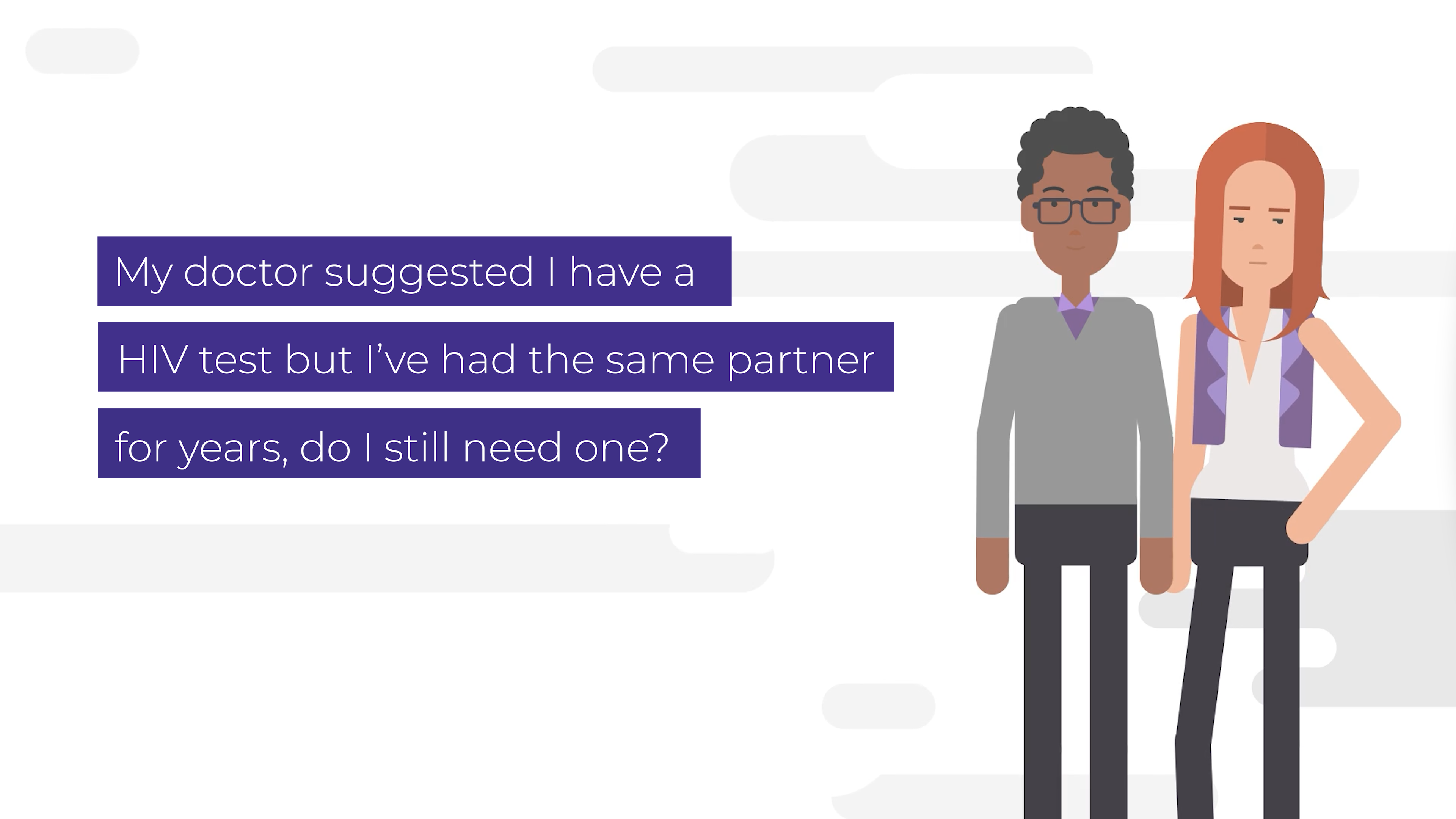
It’s a good idea for all adults to have an HIV test at least once even if they have been with the same partner for years.
If someone changes partner or has a new partner, it’s a good idea to have regular HIV and sexual health tests.
HIV tests are now a routine part of care. Including an HIV test is helps rule it out as a possible cause of your symptoms, or identify it early so treatment can begin and you can be properly supported.
No, HIV is the virus that can be passed on from one person to another. AIDS is the collection of symptoms and conditions that can result if the HIV is not treated and goes on to damage the person’s immune system.
HIV can be passed on during sexual activity without a condom or other barrier, sharing injecting equipment, mother to baby and in some parts of the world during surgery or blood transfusions.
No. HIV is a completely manageable condition. The treatment is very effective and people living with HIV who are on treatment live a healthy life with a normal lifespan.
Someone living with HIV who is taking their HIV treatment correctly and their HIV viral load is undetectable, this means they cannot pass the virus on to anyone else, including during sex. Your HIV status and care is private and confidential.
Most HIV treatment is one or two tablets, once a day. Some people experience some mild side-effects but if they tell their HIV doctor or nurse, they can advise ways to minimise the side effects or look at alternative treatments.
No, You aren’t at risk of getting HIV through normal activities like sharing food, using the toilet or even kissing and hugging. Most people in the UK who have HIV are on medication which means they can’t pass it on to someone else.
HIV can be passed on during sexual activity without a condom or other barrier, sharing injecting equipment, mother to baby and in some parts of the world during surgery or blood transfusions.


