

Measles and vaccination
Measles is still one of the most infectious diseases in the UK.
The NHS’s strongest protection against measles outbreaks is vaccination. This includes the MMR vaccine and the newer MMRV vaccine.
Measles elimination status
The UK was first declared measles‑free in 2017. However, in January 2026 the UK lost its measles elimination status. This happened because vaccination rates fell.
Why vaccination matters
It is possible to eliminate measles again, but only if more people get vaccinated and understand why immunisation is important.
The MMR vaccine is very effective. Two doses give around 97% protection against measles. Vaccination also helps stop the spread of other serious illnesses.
What this page covers
On this page, you can find information about:
- how to check your child’s vaccination status
- how to get your child vaccinated
- whether your child will be offered the MMR or the newer MMRV vaccine
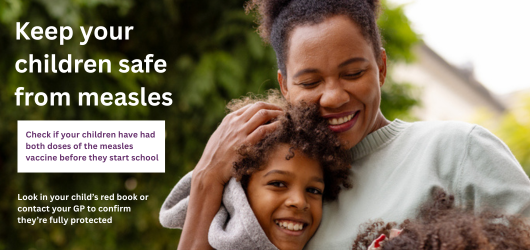
There are a few simple ways to check whether your child has had both doses of the MMR or MMRV vaccine.
You can:
- look in your child’s red book, where vaccinations are usually recorded
- check the NHS App for your child’s vaccination records
- contact your GP surgery, who can confirm which vaccines your child has received
If your child is at school, you can also ask the school nurse for help.
All children in the UK are routinely offered the MMR vaccine as part of the NHS childhood immunisation programme.
- The first dose is given at around 1 year of age
- The second dose is given at around 3 years and 4 months
In some areas, children may be offered the combined MMRV vaccine, which also protects against chickenpox. Both the MMR and MMRV vaccines provide the same level of protection against measles.
If your child missed one or both doses when they were first offered, it is not too late to get them vaccinated.
The vaccine is available free of charge through the NHS at any age.
Children, teenagers and adults can all get vaccinated if they were not fully protected earlier.
- Young people and adults can contact their GP surgery to arrange an appointment
- School‑aged children may be offered catch‑up vaccinations through school health services
If you would like more information, speak to your child’s school nurse.
Measles is one of the most contagious infectious diseases in the UK. It is caused by a virus that spreads very easily from person to person.
Many people recover from measles. However, it can sometimes cause serious complications, especially in young children and people who are more vulnerable.
Possible complications of measles
Measles can lead to:
- ear infections
- pneumonia
- inflammation of the brain (encephalitis)
- complications during pregnancy
- in rare cases, death
How measles spreads
Measles spreads through coughing and sneezing. The virus travels in tiny droplets in the air.
These droplets can stay in the air or on surfaces for several hours. This makes measles extremely easy to catch without protection, such as the MMR or MMRV vaccine.
Early symptoms of measles
The first symptoms of measles can include:
- a high temperature
- a runny or blocked nose
- sneezing
- a cough
- red, sore, watery eyes
The MMR vaccine is a safe and highly effective injection. It protects against:
- measles
- mumps
- rubella
The MMRV vaccine offers the same protection. It also protects against chickenpox.
When the vaccines are given
These vaccines are routinely offered to children in the UK as part of the NHS childhood immunisation programme.
- The first dose is given at around 1 year of age
- The second dose is given at around 3 years and 4 months
Having both doses on time helps build strong, long‑lasting protection early in life.
If a dose was missed
If you or your child missed one or both doses, it is still important to get vaccinated.
The vaccine can be given at any age and is available free of charge through the NHS.
How the vaccine works
The vaccine helps the immune system make antibodies. These antibodies recognise and fight the measles virus.
After two doses, the vaccine provides around 97% protection. This helps protect the vaccinated person and reduces the spread of measles, which is highly infectious.
Testing for measles
Measles is not tested for routinely.
If someone has symptoms, a doctor may arrange a test to confirm the infection. This may involve:
- a saliva (oral fluid) test, or
- a blood test
These tests look for the measles virus or antibodies.
What to do if you think you have measles
If you think you or your child may have measles, contact your GP surgery or NHS 111 before attending in person.
Measles spreads very easily. Calling ahead helps protect others and allows healthcare staff to advise you on testing and next steps.
Preventing measles
There is no routine screening programme for measles in the UK.
The best way to prevent measles is vaccination with the MMR or MMRV vaccine. This is the most effective way to protect yourself and others.


