
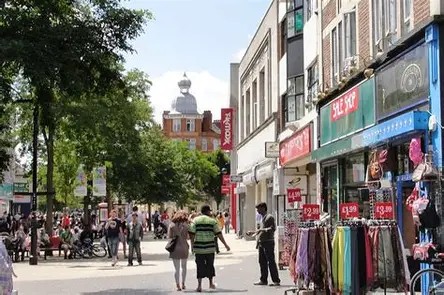
We connected with small business owners and networks through the Chiswick Business Networks monthly co-working event, Business in the Community and West London Chambers. We conducted interviews about future of their businesses in Hounslow. To capture views from high street businesses, we went door-to-door across Hounslow Central, Brentford, Feltham, and Isleworth, walking through a tailored business survey with owners at their premises.
The 32 people from businesses across the borough shared mixed and often cautious expectations for 2050. Many small business owners express uncertainty about long-term prospects, with several planning to retire or close their businesses well before then. Concerns about rising operational costs, competition from online retailers, lack of parking, and insufficient council support are recurring themes. Some businesses worry about the area's safety, cleanliness, and the impact of residential overdevelopment, which they feel could worsen overcrowding and reduce the appeal of the high street.
Despite these concerns, a few businesses are optimistic about growth and expansion. Some hope to open multiple locations, pass their businesses on to family, or adapt to future trends like automation and online services. There's a desire among creatives and entrepreneurs for better community infrastructure—such as affordable workspaces, clearer communication with the council, and more support for youth and local talent. Overall, while some see potential for innovation and community development, many are focused on surviving current challenges rather than planning far into the future.
On 13 July, and 13 September, we partnered with C-Change West London, a local to consult with young Hounslow residents through the medium of film. Young people were given prompts related to Hounslow life in 2050 and were asked to create short film pieces to represent their views and thoughts on this. Those who wished to be taught skills relating to film-making were supported by Grey Beanie Productions, a local production company. This fostered an environment where young people were learning and being empowered to share their voices in a creative way.
We worked with Creative People and Places Hounslow (CPP Hounslow) to bring over 190 local people together to create fun and joyful arts experiences depicting the borough in 2050.
Lalita Bailey at Heston Action Community Garden (13 July)
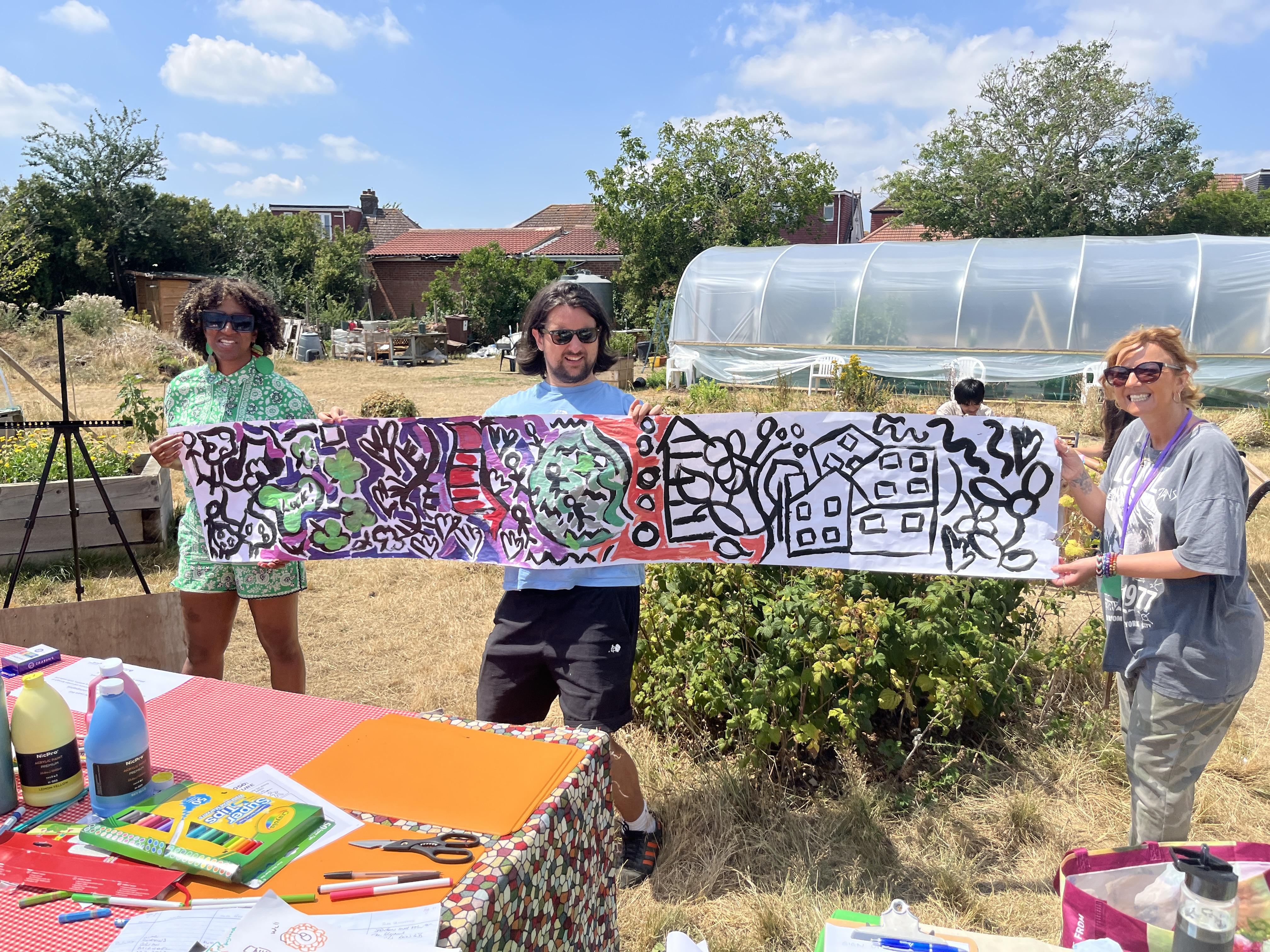 In collaboration with Heston Action Group and CCP at Heston Community Garden, local artist Lalita Bailey worked with residents to creatively depict the future of the Borough. Lalita responded to these creatively, resulting in a large, painted mural, bringing together the themes shared by residents. The drawings revealed shared hopes and priorities for Hounslow’s future. Participants imagined a greener borough, with trees, gardens, and open spaces at its heart. Repeated images of houses pointed to the need for affordable housing, while flowing lines and transport motifs reflected a desire for better movement and connection.
Alexis Parinas at Middlesex Pride (21 July)
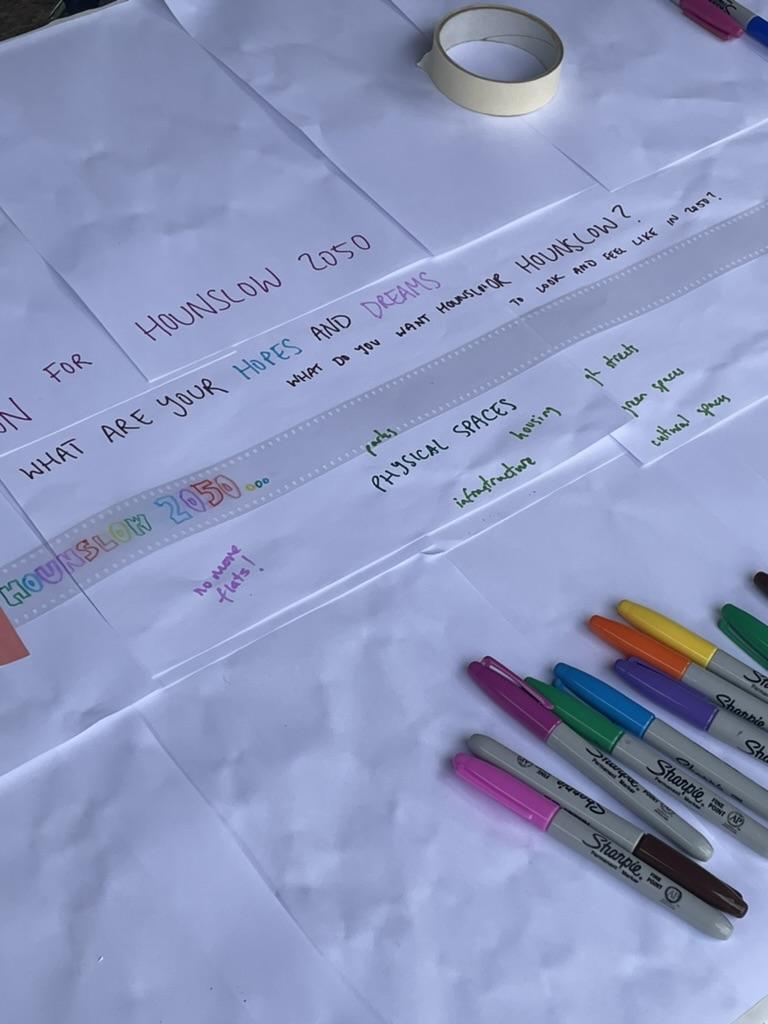
At Middlesex Pride, local artist Alexis Parinas invited the participants to add to a paper scroll an image or text that explored what the borough might look like in the year 2050. Following this workshop, Alexis created an animation that brought together the ideas, themes and hopes shared that day. Some of these shared visions imagine a future Hounslow that is vibrant, caring, and full of community spirit. Phrases such as “No Flammable Cladding” and “Community Arts Centre” highlight aspirations for safe housing, creativity, and inclusive spaces. Words like “Love, Respect, Kindness” and depictions of people and homes express hopes for a borough built on mutual care and looking after one another.
Yukiko Munemoto at Feltham Fete (2 August)
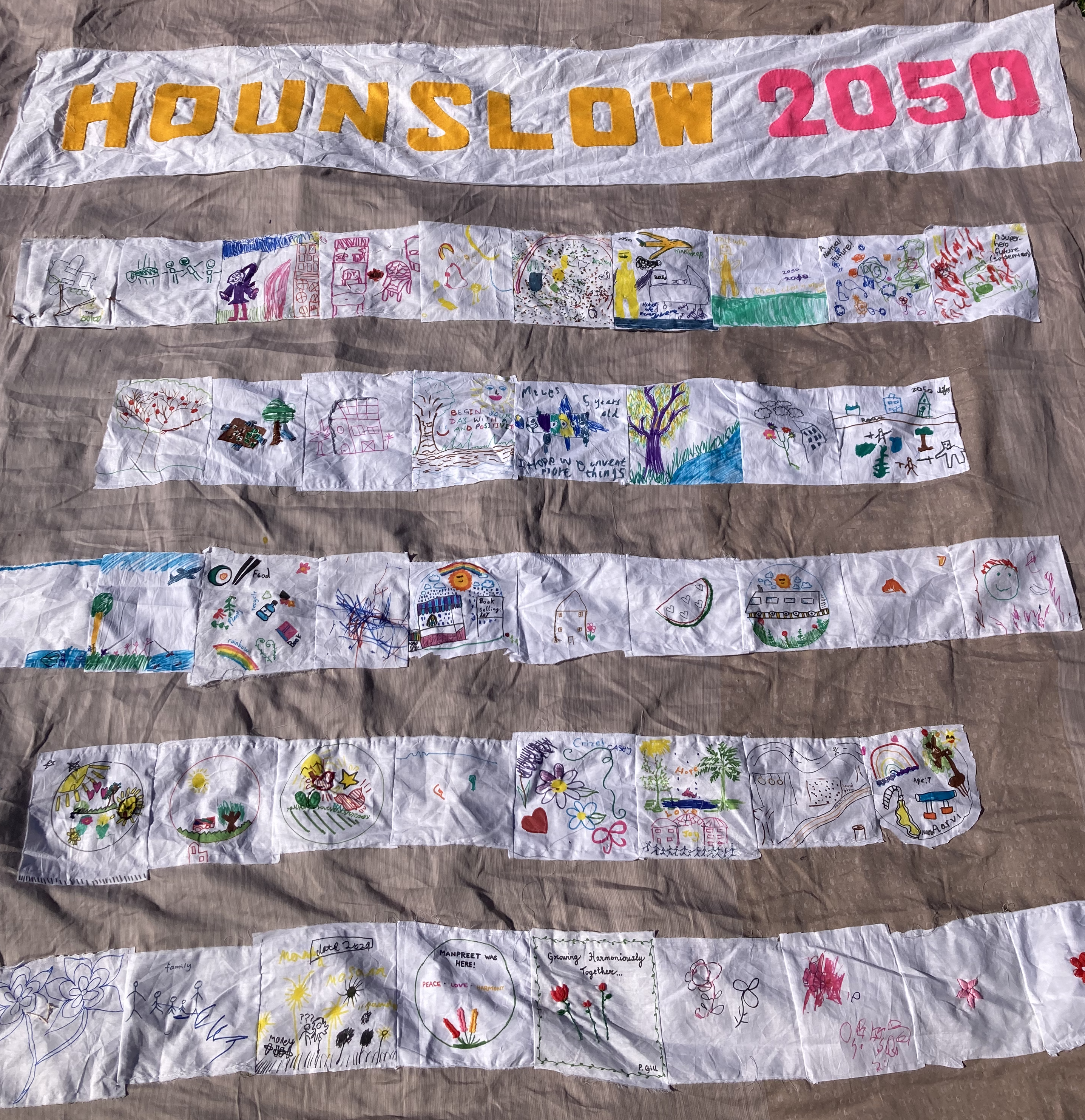
Artist Yukiko Munemo delivered a hands-on textile workshop at Feltham Fete. Participants were invited to draw and stitch into individual fabric squares, which were later pieced together to form a large collaborative quilted artwork. The activity offered a mindful and creative moment for people of all ages to think about their priorities for the future. The participants produced scenes of trees, flowers, and cycle paths showing a shared commitment to sustainability and better ways of moving around. Pieces combining homes and shared outdoor spaces reflect hopes for neighbourhoods that bring people together. Images of older and younger residents side by side suggest a future that values care and inclusion.
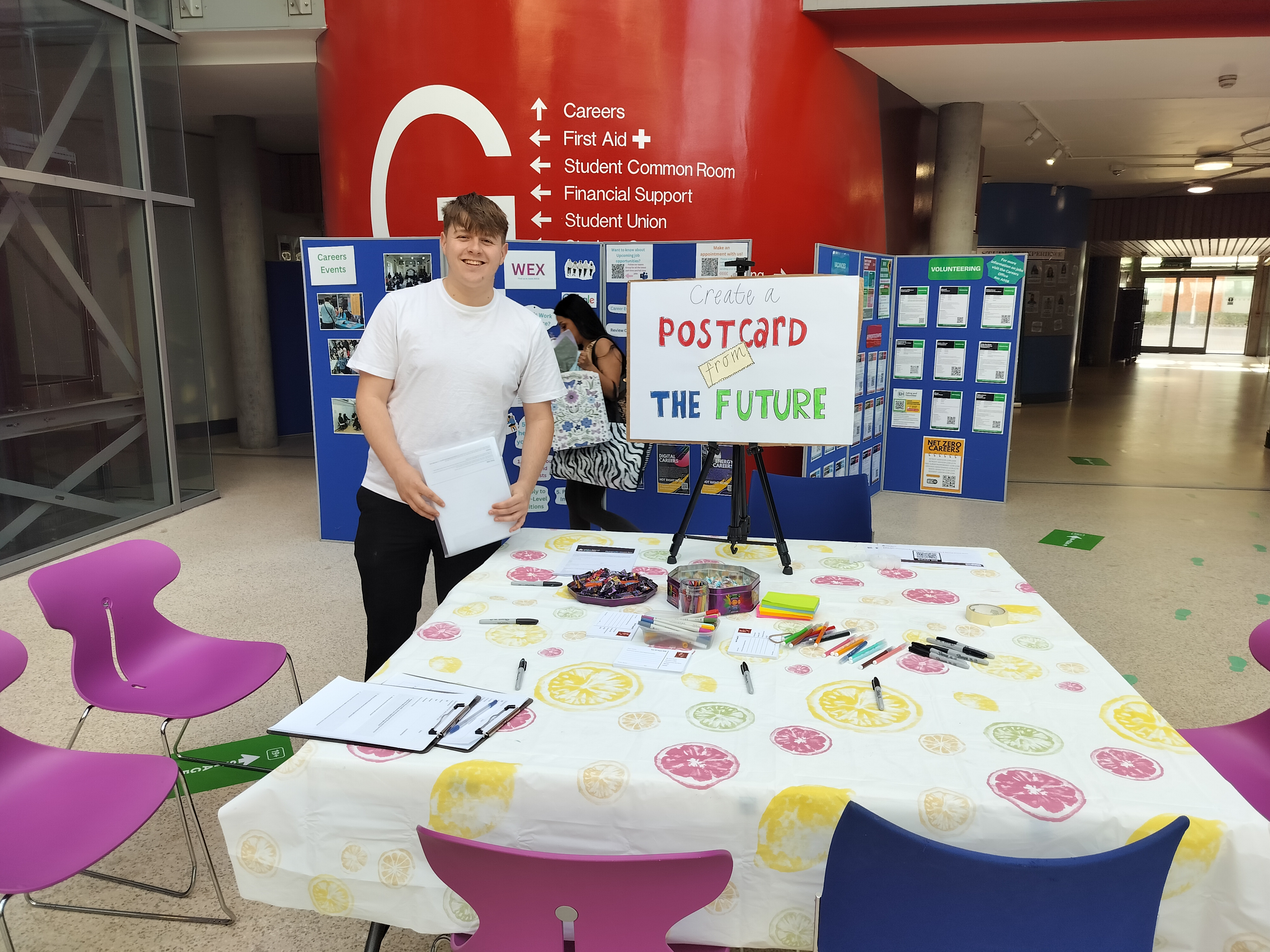
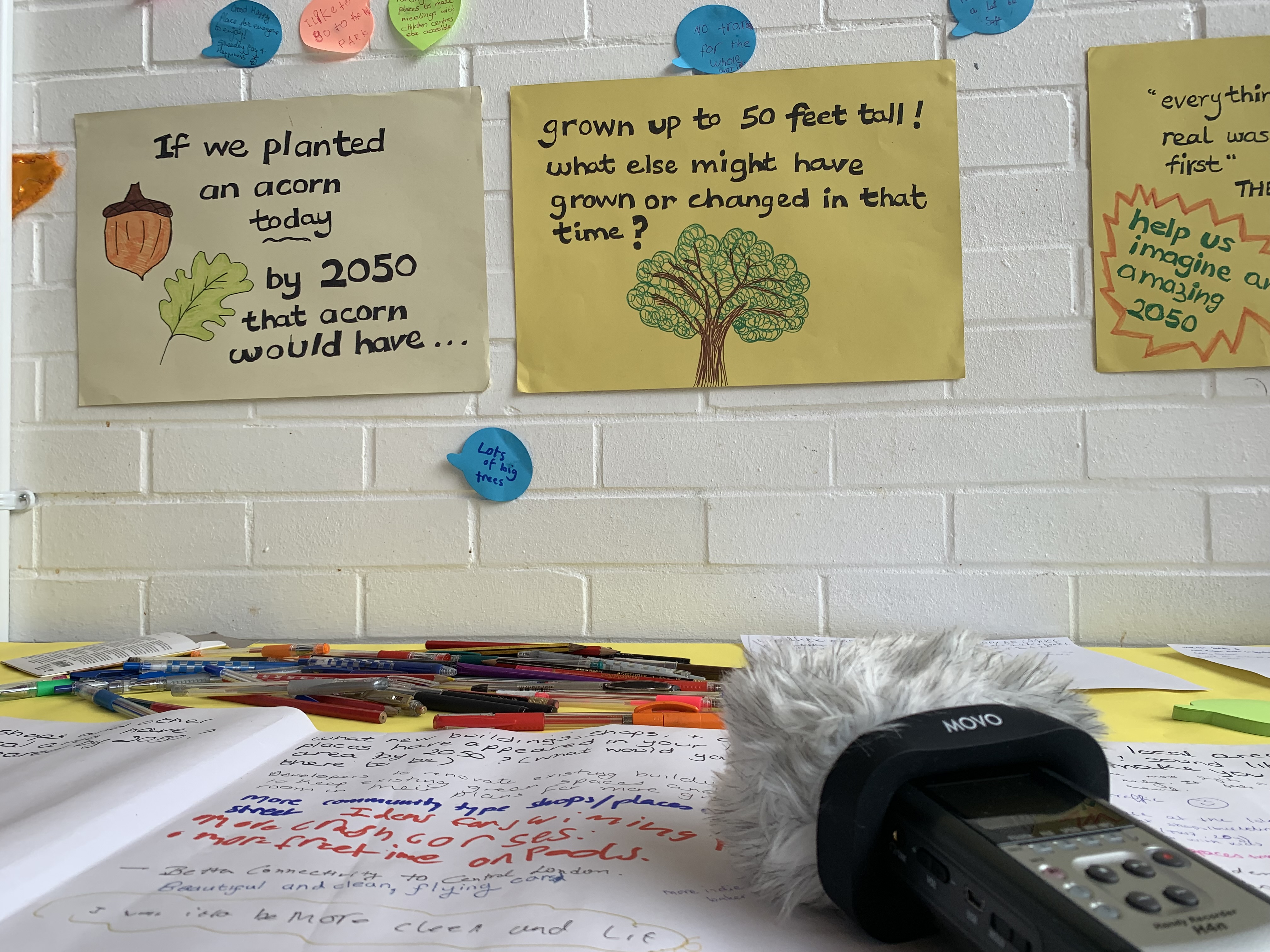
We hosted various stalls and activities at fetes and events across the borough in the Summer. This included Feltham Fete, Bedfont Lakes open day, various library events and the seven London Borough of Hounslow Area Forums. We interviewed residents about the views of the future and asked children and adults to design and write a postcard from the future. We also spoke to groups like the library knitting group. Over these 12 events we interviewed 107 people and 141 postcards were collected (see Postcards from the Future).
Residents expressed mixed feelings about Hounslow’s future. Many feared increased urbanisation, loss of green spaces, and worsening pollution, particularly linked to climate change. While some were hopeful about technological advancements and improved transport, concerns about affordability, crime, and social isolation were common.
Environmental issues dominated discussions, with predictions of hotter conditions, reduced greenery, and more high-rise developments. Participants stressed the need for sustainable practices, better recycling, and green infrastructure. Housing affordability and overcrowding were recurring worries, alongside calls for improved planning and community spaces.
Residents valued clean, safe public spaces and stronger community pride. Suggestions included more youth engagement and inclusive events to foster cohesion. Crime prevention and better lighting were seen as essential for creating a safer borough.
Views on education were divided: some anticipated tech-driven learning and virtual schools, while others hoped for holistic, creative approaches. Employment was expected to shift toward AI and automation, raising fears of job losses and reduced human interaction. Growing old was often associated with financial and health challenges, though some hoped for improved care and community support.

On 11 September we met with the Friends of Faith, a multidenominational group for people of all faiths in Hounslow. The session highlighted an optimism about the future of interfaith engagement in Hounslow, although they raised concerns about the future of their group.
Participants noted that young people are increasingly exposed to different faiths through schools, visits to places of worship, and inclusive activities. This growing religious literacy and curiosity is seen as a foundation for deeper understanding and collaboration over the next 25 years. They celebrated Hounslow’s reputation as a multicultural and tolerant borough and expressed a hope that this will continue to strengthen community ties.
Looking ahead, participants envisioned a legacy where interfaith work remains vibrant, relevant, and appeals to future generations. Ideas included creating more meaningful and fun opportunities for engagement, building on the integration already happening in schools, and ensuring strong partnerships with local institutions to sustain progress. The goal is a borough where diversity is embraced, safety and respect are guaranteed, and interfaith collaboration is seen as a natural part of community life.
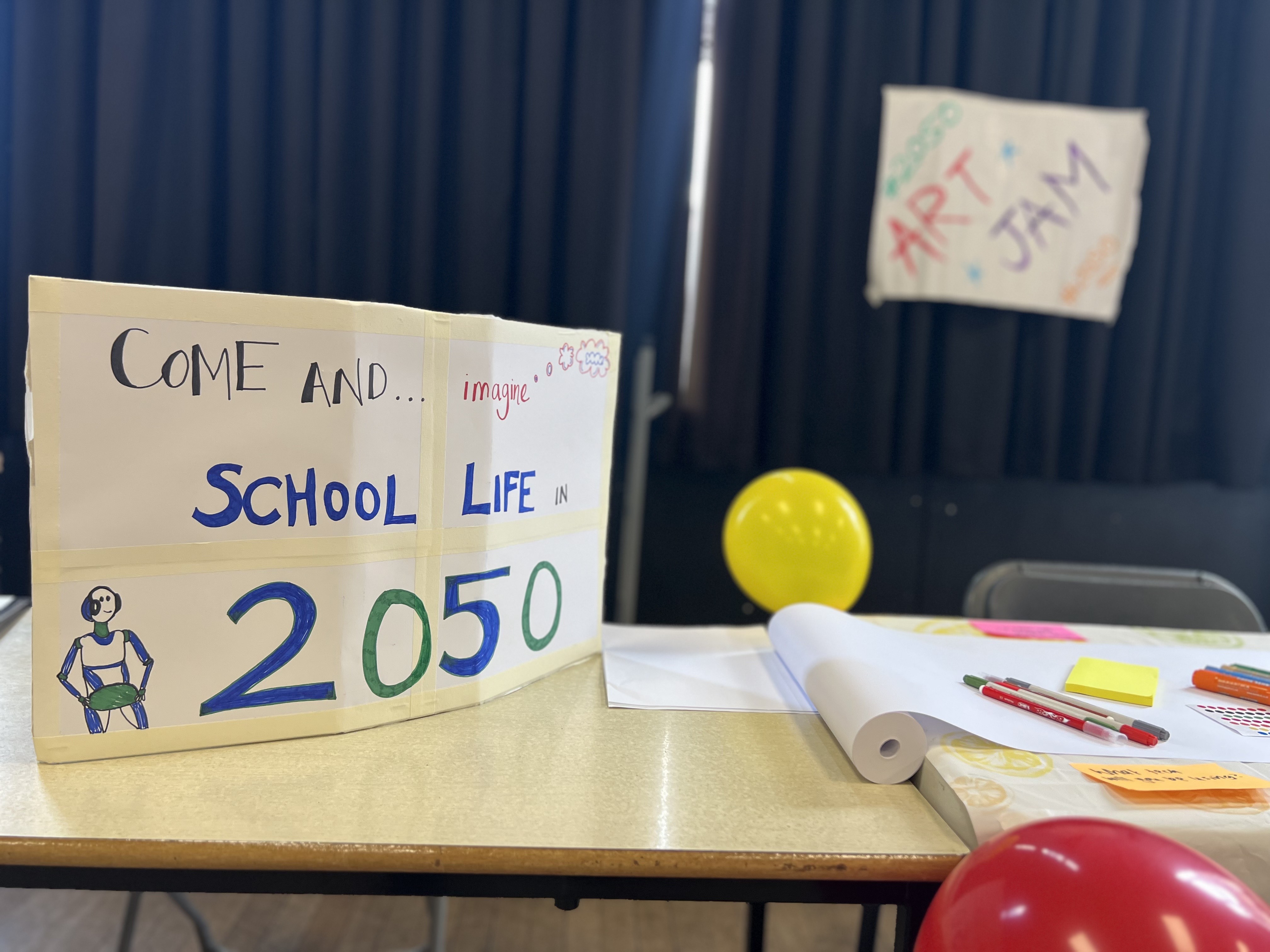
Between 26 June and 11 July, we attended four schools across the Borough – Chiswick School, The Green School, Rivers Academy, and Reach Academy – running an ‘Art Jam’ activity for students aged 11-17. Students were given prompts around school life in 2050 and encouraged to depict (through drawing or writing) their responses. This resulted in a collection of canvasses outlining how Hounslow students see he future of schools, uniform, school clubs, trips, curricula, teaching, and many more aspects of education.
Students depicted a future where education is deeply intertwined with technology and sustainability. Classrooms will feature AI and robot teachers, virtual reality lessons, and personalised learning powered by advanced systems. Hybrid models combining in-person and remote learning are expected to become the norm, while wearable tech and gaming clubs will enhance engagement. Traditional subjects like maths and science remain central, but new courses in AI, robotics, and life skills such as financial literacy will prepare students for a rapidly changing world.
Students across several schools imagine a future where education is deeply intertwined with technology and sustainability. Classrooms will feature AI and robot teachers, virtual reality lessons, and personalized learning powered by advanced systems. Hybrid models combining in-person and remote learning are expected to become the norm, while wearable tech and gaming clubs will enhance engagement. Traditional subjects like maths and science remain central, but new courses in AI, robotics, and life skills such as financial literacy will prepare students for a rapidly changing world.
Between 20 and 22 August, we met with children and young people through the Holiday Activities and Food (HAF) programme community activities. This was primarily play-based engagement, where children and young people were encouraged to participate in games while answering a variety of questions about the future (e.g., 'how old will you be in 2050?', 'where will you be playing with your friends in 2050?', 'where will you be in 2050?'). Themes discussed included hospitals where patients had lovely garden spaces to enjoy, play areas that they could walk to every day, restaurants for children, school trips to outer space, and a world where everyone can talk about their feelings. Young people were finally asked to write or draw what they discussed on a 'postcard from the future'.
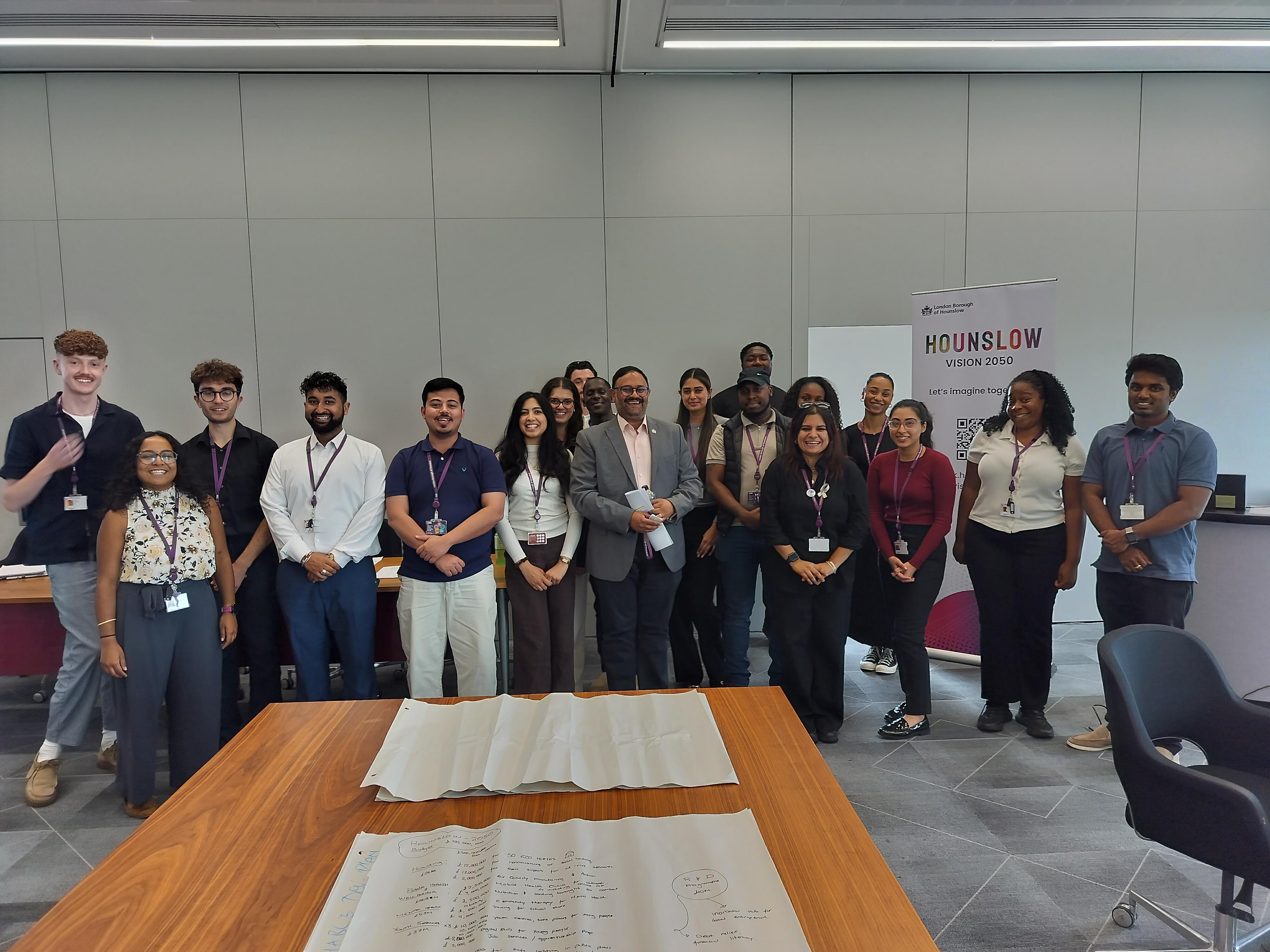
Staff who work in the London Borough of Hounslow and those who also live in the borough, were invited to engage in a range of workshops and discussions as part of the Visioning work. Staff equality networks, councillors, Hounslow leaders, young staff, apprentices, data practitioners and anyone interested in the discussion were involved in various workshops, meetings and online engagements.
We chatted to over 550 colleagues about the future they want for the borough, the legacy they would like to leave and how we can structure the organisation to enable us to be good ancestors.
Officers shared a mix of optimism and realism about the future. They anticipate a borough shaped by technology, sustainability, and demographic change, with driverless transport, AI-driven services, and greener urban spaces becoming the norm. Climate resilience, improved air quality, and access to nature were seen as essential priorities, alongside safer communities and better integration of health, housing, and social care. Education and youth engagement were highlighted as critical to preparing future generations for a rapidly changing world.
The desired legacy is a council that leads rather than follows, modern, inclusive, and proactive. Colleagues want to leave behind a borough with strong community cohesion, equitable opportunities, and robust infrastructure for health and wellbeing. They stressed the importance of moving away from short-term cycles toward long-term planning, embedding sustainability, and fostering collaboration across sectors. Practical steps include ring-fencing time for long term thinking, improving data use for decision-making, and creating participatory processes that involve residents in shaping the future.
On 13 August we attended a bimonthly meeting of the Mental Health and Wellbeing Group which includes health partners, VCSE, and social prescribers. We discussed what changes they would like to see to support residents’ mental health and wellbeing and the legacy they would like the group to leave.
The participants highlighted aspirations for faster access to mental health support, shorter waiting times, and daily drop-in centres offering free help. They dream of integrated, person-centred systems, holistic care for coexisting conditions, and normalising mental health conversations in workplaces.
They stressed the need for systemic shifts, cross-sector collaboration, and planning beyond short-term political cycles. The group’s desired legacy is tangible impact through research, advocacy, and community input to deliver real outcomes for residents.
We also created a platform for online engagement. Residents, councillors, officers, businesses and partners were invited to tell us about their thoughts for the future via our online platform. Quick Polls, forums and a survey were set up to capture these views. We had 163 responses. One quote is included below:
In 2050, I want Hounslow to be the kind of place where everyone feels proud to live – a clean, green and kind community that welcomes people of all ages and backgrounds. To start with, our streets should be full of trees, flowers and wildlife. We could have rooftop gardens, vertical farms on buildings, and parks with solar powered benches that charge your phone! Every neighbourhood would have its own little forest where children can explore, and animals can thrive. Transport would be electric, quiet and free for everyone.
There would be bike highways, hover-bus stops, and even walkways that light up with every step – powered by the people who use them. The air would be clean and fresh because we’d no longer need petrol cars at all. For work, there would be high-tech hubs and creative studios right here in Hounslow – not just in the centre of London.
People could invent, design, and build amazing things close to home. Schools would teach coding, robotics, music, gardening – and kindness too – so everyone has a chance to find their passion.
Elderly people would never feel lonely or left out. We’d have multigenerational homes where families live together, and community centres full of fun, laughter, and learning. Robots might help with chores, but it would still be people who care for each other. Most of all, Hounslow would be a place where everyone has a voice, where no one is left behind, and where the future is bright for all – no matter your age, race, or background. That’s my dream for Hounslow in 2050. - Young person, TW13

Following a project led by resident researchers on Net Zero Neighbourhoods, we worked with one of the peer researchers to interview other residents on their views of the future of Hounslow in 2050.
Residents described a diverse, inclusive, and sustainable borough that balances technological progress with strong community values. They imagined a future shaped by renewable energy, green spaces, and responsible development that supports wellbeing and social connection. They also hoped for improved amenities for all, innovative infrastructure to reduce congestion and pollution, and the thoughtful use of AI and robotics to enhance daily life while preserving human interaction and strengthening neighbourhood ties.
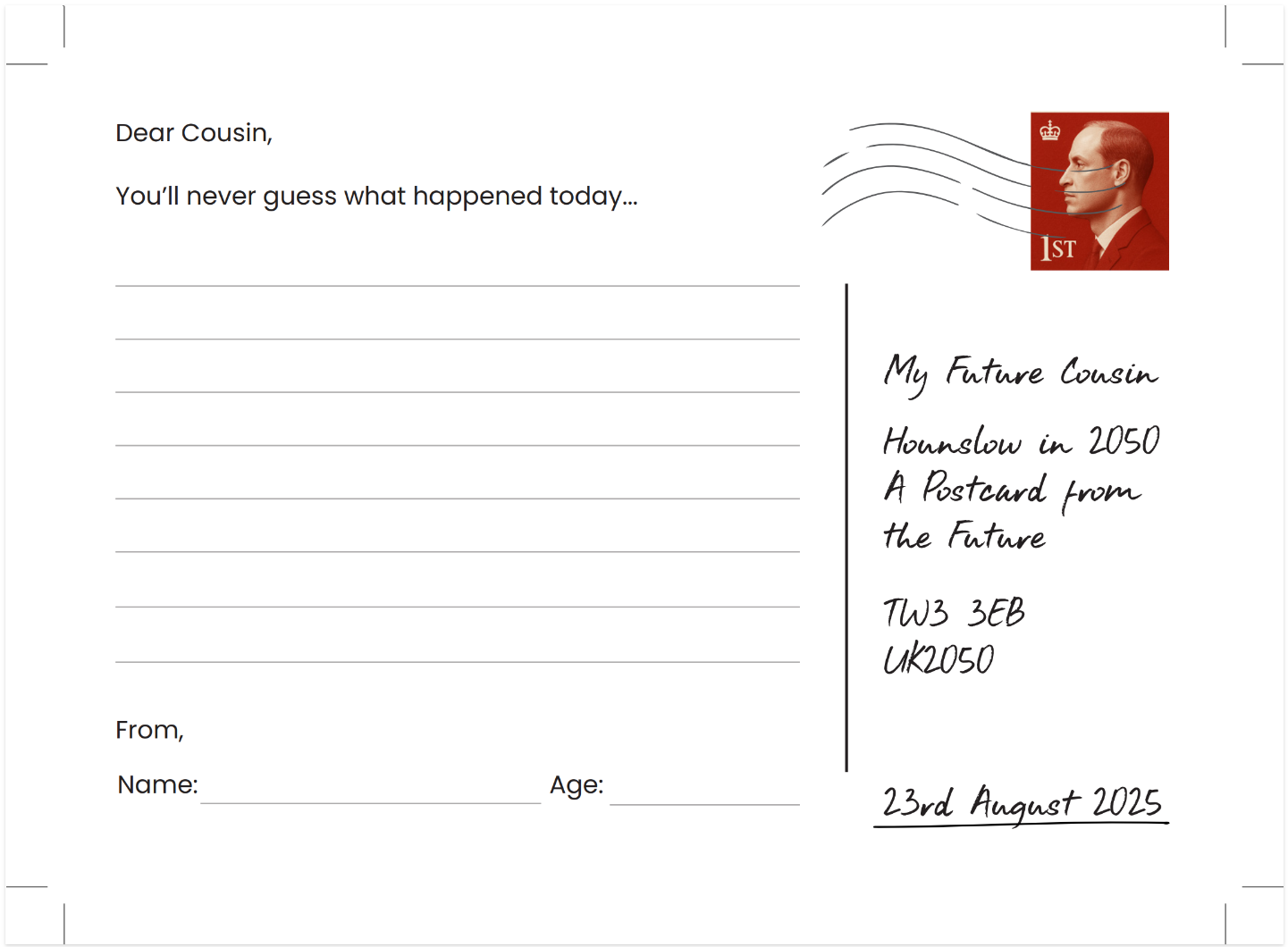
We met people in libraries, community centres, films, parks, and at events and asked them to decorate and write a postcard from the future. We received depictions of future, homes, parks, communities, shopping areas as well as people’s lives and works in the future.
The postcards painted a vivid picture of Hounslow in 2050, dominated by advanced technology and green spaces. Many imagined a tech-driven world with flying cars, teleportation, robot goalkeepers, AI healthcare, and even futuristic currency like Bitcoin. Some visions were playful—flying pigs, ice cream trucks in the sky, and time travel—while others reflected serious expectations of automation and AI reshaping jobs and daily life.
Environmental aspirations featured strongly, with calls for more parks, wild swimming spots, tree-lined streets, and connected green spaces. Several postcards envisioned a borough free of cars, rich in biodiversity, and committed to sustainability, including recycling incentives and electric transport. Social and cultural ideas included community hubs, festivals, beer gardens, and spaces for teenagers beyond screens. Health innovations, civic pride, and inclusive design for people with disabilities were also recurring themes.
Have a look at the postcards yourself to pick out some of the themes.
Over the summer, we were invited to talk to all four of the resident forums who represent Hounslow’s various equality groups. We spoke with the LGBTQ+ Forum, the Disability and Age Forum, the Women’s Forum and the REED Forum (representing Hounslow’s minority ethnic groups), and asked them about the changes they are excited to see over the next twenty-five years, what developments they’re wary of, and what unique legacy they’d like to leave for all of Hounslow’s residents.
Across Hounslow’s equality networks, participants shared aspirations for a more inclusive and equitable future. For older people and those with disabilities, there is optimism about greater self-advocacy and awareness of entitlements, supported by digital tools and culturally tailored services. However, concerns remain about rising demand, funding, and language barriers.
LGBTQ+ representatives highlighted progress in rights awareness and inclusive cultural strategies, alongside ambitions for services that adapt to gender fluidity and diverse identities. Risks such as hostile rhetoric and legislative changes were noted, with calls for robust protection mechanisms and education on legal implications. The desired legacy is a borough where equality is embedded in health, social care, and cultural life:
Pride month is one thing, but outside of that time, having a clear safe space that says that we're here is important. - LGBTQ+ Network member
For racially diverse communities, the vision includes systemic change, moving beyond training to structural reforms, transparent budgeting, and stronger democratic engagement. Participants called for culturally competent services, multilingual staffing, and leadership that reflects the borough’s diversity. The ultimate aspiration is for networks like REED to become obsolete because racial equity is fully achieved, leaving a legacy of visible impact:
Ideally, I hope that [in the future], racial equality is achieved, and we no longer need these groups. - REED network member

In order to facilitate some in depth discussion about what the future of the life course might look like in Hounslow in 2050, we hosted a focus group with two groups of adults that we had struggled to engage with during other activities, there were young professionals aged 25 to 30 and adults aged 35 to 40. We heard about what they think work, families and aging will be like in Hounslow in 2050.
By 2050, focus group participants expect work to be highly flexible and tech-driven, with remote and hybrid models replacing traditional office setups. AI will reshape job roles, making digital fluency and adaptability essential. They see rising living costs and housing pressures influencing family choices, with smaller households and delayed parenting becoming common. Some felt that entrepreneurship is likely to grow as dissatisfaction with traditional employment increases.
Focus group participants spoke about how social norms are shifting toward fewer marriages, more cohabitation, and single parenting. They believe people will live longer and have to work longer as well as rely on a fragmented care system. Some thought that communities will rely more on digital networks, but isolation and cultural barriers may persist.
Their outlook was cautiously optimistic, hopeful about technology and social progress but concerned about housing, care, and climate challenges.
“I’m optimistic, but worried.” Focus group participant.

To gain deeper insights into the range of ambitions that Hounslow’s young people have, we collaborated with Spark! to speak to some of their Young Associates about their career ambitions and how they see Hounslow’s education and labour market. We asked them about their views on how well education has prepared them for the world of work, how they think modes and styles of employment will shift over the next 25 years, and what they think needs to improve locally to help young people of the future thrive.
A recent focus group with local young people revealed strong themes around independence, opportunity, and uncertainty in the world of work. Many participants described starting part-time jobs at 16 as a way to gain responsibility and financial independence, while others prioritised education and unpaid experience to build future careers. Entrepreneurship and self-employment emerged as increasingly attractive options, driven by the rise of digital platforms and the need for multiple income streams amid rising living costs.
Looking ahead, participants expect a shift toward digital careers, AI, and flexible pathways, while traditional roles in hospitality and retail are seen as enduring. Concerns centred on affordability, competitiveness, and access to work experience, with calls for more structured support from schools, councils, and employers. Despite anxieties about housing costs and job security, young people expressed determination to pursue opportunities, develop transferable skills, and seek experiences beyond their local area—balancing ambition with the realities of a changing economy.
As part of the Hounslow Summer of Culture, fairy godmother “Gloria Darling” invited parents on an imaginative journey to the year 2050. On 4-6 September at Isleworth Library, families were invited to tell stories and contribute to an opinion board on what they thought it might be like to parent and have children in 2050.
Gloria guided over 50 residents in co-creating visions of the future. They imagined a future where family life is vibrant, safe, and connected to community spaces. Parks and leisure facilities feature prominently in these visions, with calls for more playful and creative environments, think climbing frames reaching the clouds, splash zones, and interactive gardens where children can grow food. Swimming pools and leisure centres are expected to evolve beyond fitness, offering fun features and family-friendly spaces. High streets, too, are reimagined as clean, pedestrian-friendly hubs filled with independent cafés, creative workshops, and affordable social spaces.
Technology is seen as a helpful but secondary player: robots may assist with chores or care tasks, yet human interaction remains central to wellbeing. Intergenerational activities, where teenagers teach tech skills and older adults share life experience, are viewed as vital for reducing isolation and building mutual respect. Alongside this, residents stressed the importance of safety, affordability, and inclusive design, from better cycling infrastructure to accessible community hubs. The hope for 2050 is a borough where families thrive in green, playful spaces, supported by strong social networks and opportunities for lifelong learning.
We have engaged with voluntary sector organisations across the borough through a variety of forums. On 16 July, a session hosted by Hounslow Voice Network and organised by Ealing and Hounslow CVS, facilitated a conversation about what the voluntary and community sector in Hounslow will look like in twenty-five years and the challenges and opportunities for the communities they support. Each organisation also spoke about the legacy they hope to leave for future generations in Hounslow.
Voluntary sector representatives expressed concern about sustainability over the next 25 years, citing short-term funding cycles and the risk of closures for smaller organisations. Participants stressed the need for greater recognition of the sector’s value and stronger collaboration with the council to enable long-term planning and better delivery of services to residents.
Looking ahead, opportunities include creating a more inclusive society where fewer specialised services are needed, engaging younger generations in volunteering and skill-building, and improving coordination through platforms like Hounslow Connect. Aspirations for the future include universal access to swimming for safety and wellbeing, better support for adults with learning disabilities and autism, and greater visibility for housebound individuals. The desired legacy is a community where inclusion, accessibility, and long-term wellbeing are embedded in everyday life.
On 17 July, the Central Hounslow Community Development Network held a lively workshop discussing a similar set of questions.

On 1 May, 12 June and 18 June 2025, we engaged with Hounslow-based students undertaking a wide range of course and qualification types. We wanted to hear their thoughts on Hounslow as a place where they are developing their careers and social lives. We asked them about whether they feel fearful, or hopeful, about the future of Hounslow, and what changes they would like to see in the Borough for young people of the future.
Many of the students were pessimistic about the future. Their reasons included limited career opportunities, a lack of connection with like-minded peers, worsening community segregation, and concerns about safety issues such as knife crime and drug use.
In discussions about Hounslow in 2050, students anticipated increased urbanisation, with more high-rise buildings and traffic, alongside shrinking green spaces and fewer outdoor social or sporting areas. While leisure spaces were expected to remain largely unchanged, technology was seen as likely to enhance how people interact within them. Transport was predicted to shift towards electric vehicles and supporting infrastructure. Despite optimism about digital connectivity and skills, students voiced concerns about declining cross-community integration and cultural understanding, highlighting the need for more inclusive events and environmental efforts like tree planting to preserve liveability.
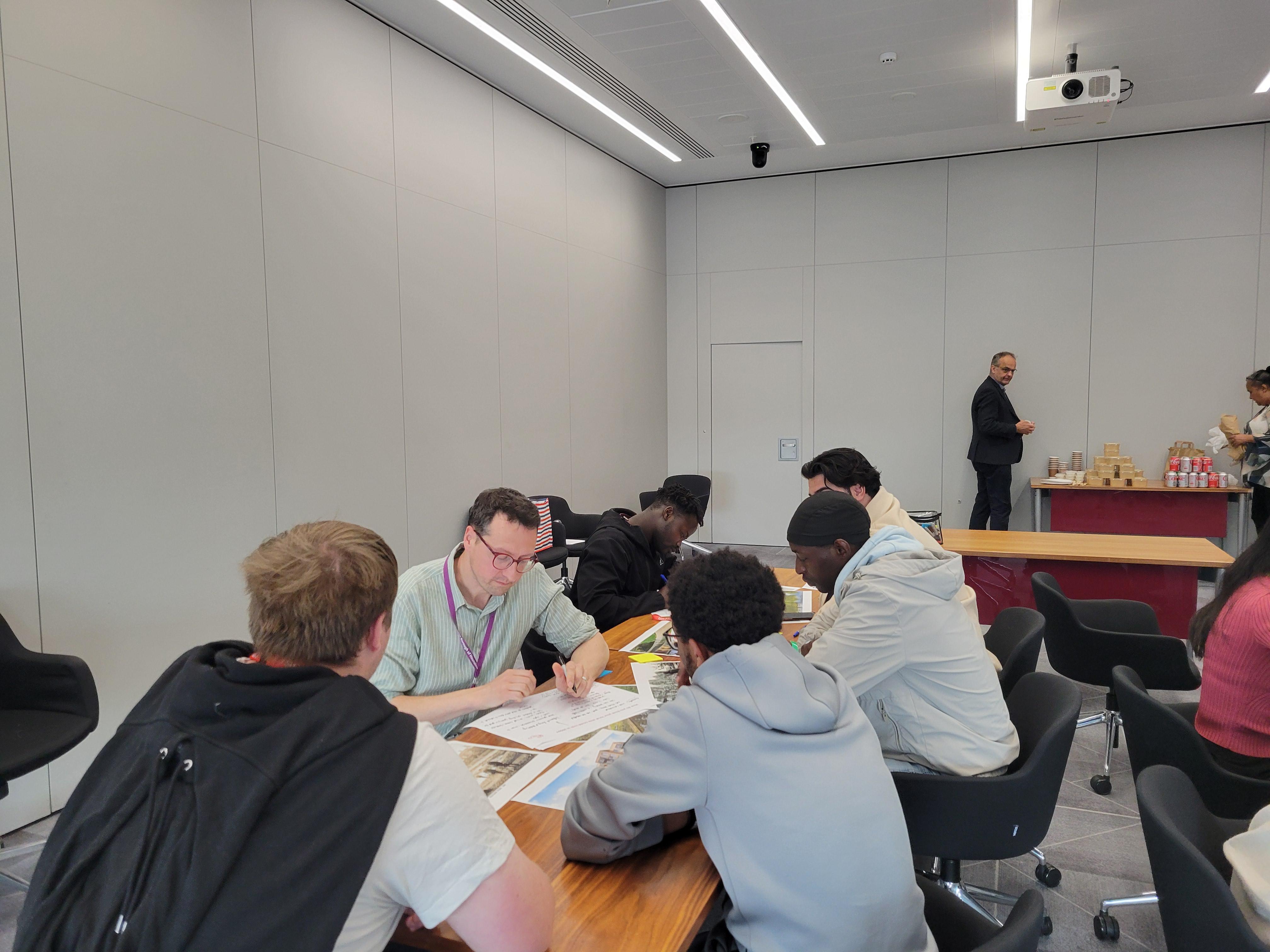
On 28 May 2025, care-experienced young people joined a workshop on their views of the future. Using some creative methodologies, the group set out their sensory perceptions of Hounslow at present, and what they think this will be like in future. We discussed their hopes for Hounslow, and their thoughts on what could improve around the offer for young care-experienced residents.
Participants shared mixed feelings about the future of Hounslow. Many feared a world dominated by technology, where human interaction and genuine connection could diminish. At the same time, they expressed hope for an efficient transport system that would strengthen connectivity within and beyond the borough. Concerns were raised about rising inequality and its impact on housing affordability, road congestion, and pollution. Several participants suggested that improving youth engagement opportunities could help address these challenges by fostering wellbeing and positive societal contributions.
Looking ahead, participants envisioned a Hounslow with safe, clean public spaces and a strong sense of community pride. They desired an environment where residents care for their surroundings, noting that this is currently lacking. Crime, particularly knife-related incidents, was highlighted as a growing concern if community cohesion does not improve. Overall, the discussions reflected a desire for balanced progress—embracing technological and infrastructural advancements while safeguarding social connection, equality, and safety.